Environmental toxicology studies how chemicals and other harmful agents affect living organisms, including people, and the environments they inhabit. Ecotoxicology is a related field that emphasizes effects on populations, communities, and ecosystems. The distinction matters: environmental toxicologists investigate how pollutants move, persist, and cause harm across environmental media and biological systems, while ecotoxicologists often ask how those effects alter ecological relationships and ecosystem functions. Together, the fields help regulators and communities assess risks from pesticides, metals, industrial chemicals, and emerging contaminants. The U.S. Environmental Protection Agency (EPA) estimates that more than 350,000 chemicals and mixtures are registered for production and use worldwide, illustrating the scale of the assessment challenge.
Environmental toxicology defines environmental contaminant effects
Environmental toxicology is the study of the harmful effects of chemical, physical, and biological agents on organisms exposed through air, water, soil, food, or other environmental pathways. The Society of Environmental Toxicology and Chemistry (SETAC) describes the discipline as integrating toxicology with environmental chemistry and ecology to understand the fate and effects of contaminants. Its scope ranges from molecular changes in an exposed organism to risks for wildlife populations and human health.
The field asks more than whether a substance is toxic in a laboratory. It examines how much enters the environment, how long it remains there, which organisms encounter it, and whether exposure produces adverse outcomes. Assessments therefore connect chemical properties, environmental monitoring, toxicity tests, exposure modeling, and risk management.
Environmental fate and exposure pathways
Environmental fate describes what happens to a contaminant after release: whether it breaks down, binds to sediment, evaporates, travels through water, or accumulates in organisms. Exposure pathways describe how people and wildlife contact it, such as inhalation of airborne particles, drinking contaminated water, or consuming affected prey. The same chemical can pose different risks depending on persistence, mobility, concentration, and route of exposure.
The U.S. Geological Survey (USGS) reports that agricultural pesticides are detected in streams and groundwater across the United States, with the types and concentrations varying by land use and season. Such monitoring helps environmental toxicologists distinguish a hazard—the capacity to cause harm—from actual risk, which depends on exposure and the likelihood and severity of effects.
Toxicity, dose, and biological response
Toxicity is the capacity of a substance to cause harmful effects, while dose is the amount an organism receives. Toxicologists test responses across doses and exposure durations, measuring outcomes such as mortality, growth, reproduction, behavior, or organ function. A dose-response relationship helps identify concentrations associated with particular effects, though responses can differ by species, life stage, and exposure conditions.
For example, early-life stages of fish and amphibians may be more sensitive to some pollutants than adults. Mixtures also complicate interpretation: chemicals may act independently, additively, or interact in ways that increase or reduce effects. Environmental toxicology therefore treats test results as evidence to be interpreted alongside realistic exposure data, not as a simple universal ranking of chemicals.
Human and wildlife health assessment
Environmental toxicology includes both human health and ecological questions. Human assessments consider exposure through food, water, air, and consumer products, while wildlife assessments examine organisms exposed in their habitats. Findings can inform drinking-water standards, contaminated-site cleanup, pesticide restrictions, and workplace or community protections.
The World Health Organization estimates that environmental risks contribute to roughly 24% of the global burden of disease. This broad estimate includes multiple environmental hazards, not chemical pollution alone, but it underscores why identifying exposure sources and preventing avoidable harm are public-health priorities.
Environmental toxicology evaluates risk across environmental systems
Environmental risk assessment combines information about a contaminant’s hazard with evidence about exposure to estimate the chance of harm under specified conditions. EPA’s ecological risk-assessment framework generally organizes the work into problem formulation, analysis, and risk characterization. Researchers identify the ecological resources to protect, examine exposure and effects, then explain the strength and limits of the evidence.
This approach connects environmental toxicology to ecotoxicology without making the disciplines interchangeable. Toxicology can identify mechanisms and effects in individual organisms; ecological assessment asks whether those effects are likely to change populations, communities, or ecosystem services. The scale of the question determines which evidence is most useful.
Environmental monitoring and chemical analysis
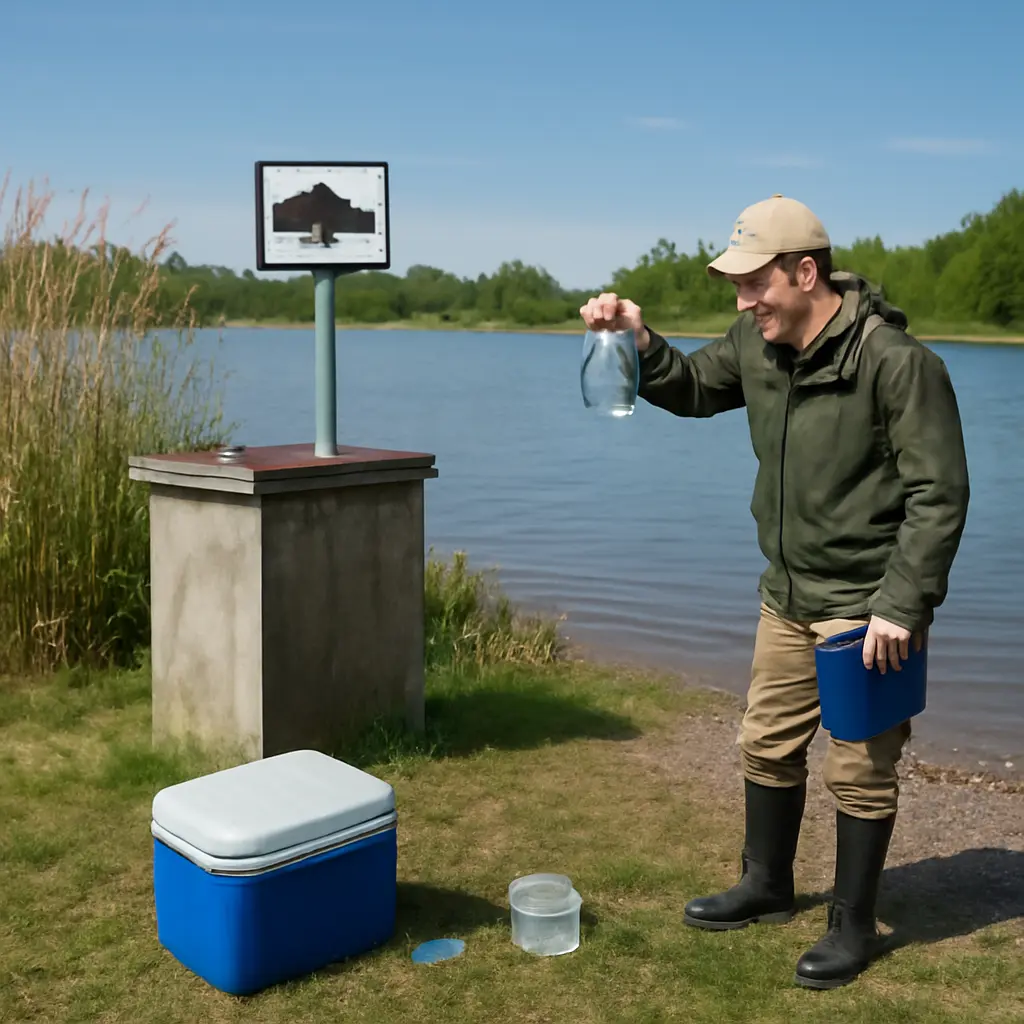
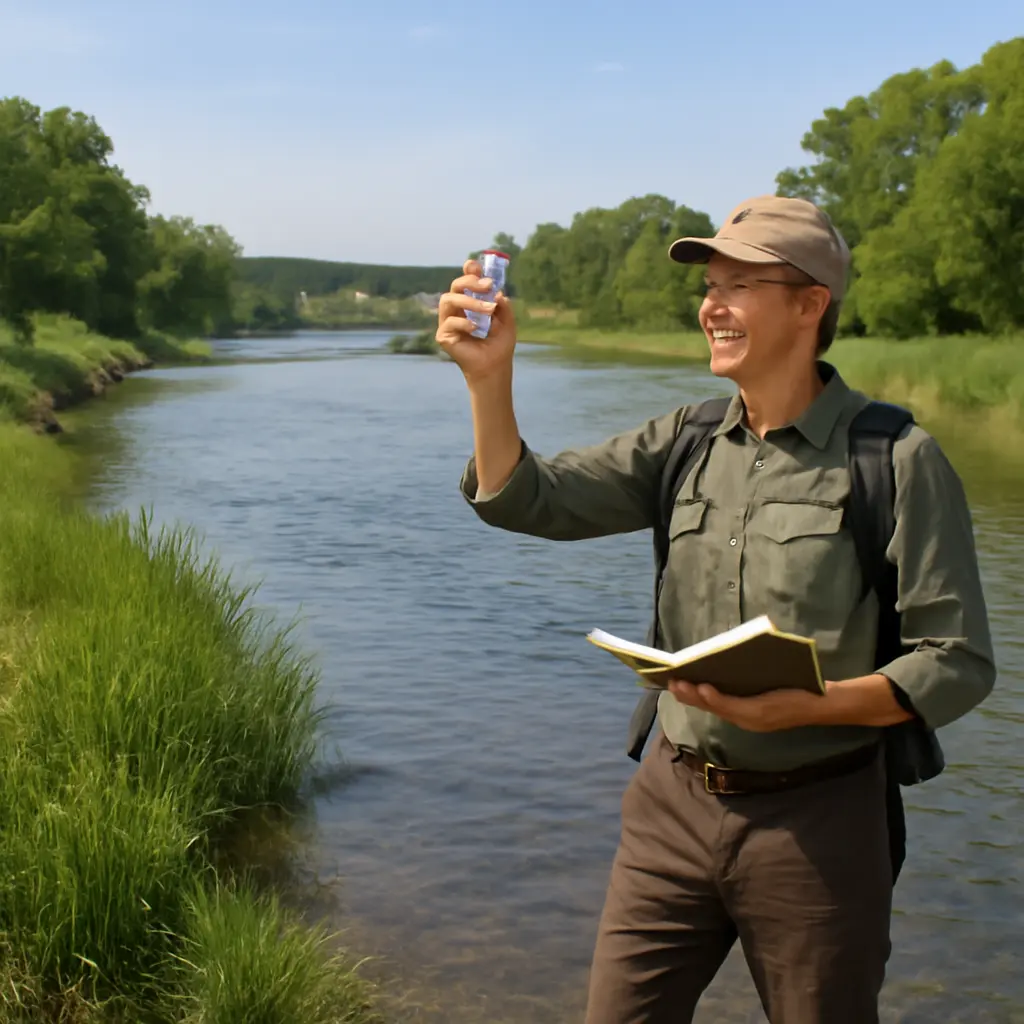
Monitoring measures contaminants in environmental media and biological samples. Field scientists collect water, soil, sediment, air, or tissue samples, then use analytical chemistry to identify and quantify pollutants. Repeated measurements reveal trends, seasonal patterns, and potential sources, while biomonitoring can show whether contaminants have entered organisms.
Monitoring data are essential because a laboratory toxicity threshold cannot establish whether organisms are exposed in the wild. The USGS National Water-Quality Assessment program has documented widespread pesticide occurrence in sampled streams and groundwater, while also showing that concentrations and mixtures differ among locations. Detection alone does not prove harm; toxicological and ecological evidence is needed to interpret its significance.
Laboratory and field testing
Laboratory tests provide controlled comparisons of exposure and biological response. Standard methods may measure acute effects over a short period or chronic effects such as reduced growth and reproduction over longer exposures. Field studies add realism by observing organisms and communities under natural conditions, where temperature, food availability, habitat, and contaminant mixtures can influence outcomes.
The two approaches complement each other: laboratory tests help isolate cause and effect, while field evidence reveals whether predicted effects occur in complex ecosystems. A strong assessment weighs both, considers uncertainty, and avoids assuming that a result from one species automatically applies to every organism.
Risk characterization and uncertainty
Risk characterization brings exposure and effects evidence together to estimate the likelihood and potential scale of harm. It may compare measured or modeled concentrations with benchmarks derived from toxicity studies. Scientists also report uncertainty arising from limited sampling, variation among species, incomplete chemical data, and assumptions in exposure models.
Transparent uncertainty analysis helps decision-makers distinguish well-supported conclusions from areas where additional monitoring or research is needed. It is especially important for chemicals with limited toxicity data, complex mixtures, or long-lived effects that are difficult to observe directly.
Environmental toxicology addresses pollutants and real-world cases
The discipline applies to familiar pollutants such as lead and mercury as well as pesticides, pharmaceuticals, industrial compounds, and per- and polyfluoroalkyl substances (PFAS). These substances differ in how they move and persist, so a single testing or cleanup strategy cannot fit every case. Environmental toxicologists combine chemical-specific evidence with the characteristics of the affected place and population.
Pesticides and aquatic contamination
Pesticides can reach waterways through runoff, spray drift, drainage, or groundwater transport. Aquatic organisms may encounter them directly, while contaminated prey can create additional exposure pathways. Monitoring and toxicity testing help determine whether detected concentrations are likely to affect sensitive species or ecological functions.
The USGS has found that pesticide mixtures are common in sampled streams, particularly in watersheds influenced by agriculture or urban land use. This example illustrates why environmental toxicology studies both individual substances and combinations, and why timing matters: runoff after application or rainfall can create short-lived exposure peaks that periodic sampling may miss.
Lead exposure and contaminated sites
Lead is a persistent toxic metal that can contaminate soil, dust, water, and food. Environmental toxicologists help identify exposure routes, assess concentrations, and evaluate the effectiveness of remediation. Children are particularly vulnerable to lead’s effects on brain development, making prevention and source control central to public-health responses.
The Centers for Disease Control and Prevention states that no safe blood lead level in children has been identified. This finding supports actions such as removing lead hazards, replacing contaminated materials, and monitoring exposure rather than relying on a threshold that would imply complete safety below it.
PFAS and emerging contaminants
PFAS are a large group of manufactured chemicals used in products and processes that require resistance to heat, oil, stains, or water. Some PFAS persist in the environment and can be detected far from their original sources. Environmental toxicology investigates their occurrence, movement, exposure pathways, and potential health effects while researchers continue to refine understanding of individual compounds and mixtures.
In 2024, EPA finalized national drinking-water standards for several PFAS, setting enforceable limits for six of them. The standards demonstrate how monitoring, toxicological evidence, and risk assessment can inform regulation; they also show that environmental decisions may evolve as analytical methods and health evidence improve.
Environmental toxicology informs prevention and policy
Environmental toxicology supports decisions before and after pollution occurs. Regulators use risk assessments to set limits, require testing, or restrict uses; industry can use them to design safer chemicals and processes; and communities can use monitoring results to identify exposure concerns. Prevention is often more effective than attempting to remove a persistent contaminant after it has spread.
Chemical regulation and safer substitution
Regulatory review evaluates whether a chemical’s expected uses create unacceptable risks and whether controls can reduce exposure. The EPA’s Toxic Substances Control Act program, for example, reviews chemical risks and can impose requirements when statutory criteria are met. Toxicological evidence contributes to these decisions alongside exposure estimates, use information, and uncertainty analysis.
Safer substitution means replacing a hazardous substance with an alternative that performs the needed function while presenting lower overall risk. A substitution should be evaluated across its life cycle so that one harmful chemical is not simply replaced by another with similar or less-understood hazards.
Remediation and environmental recovery
When contamination has occurred, environmental toxicology helps define cleanup goals and track recovery. Remediation may remove, contain, or treat contaminants, depending on their properties and site conditions. Follow-up monitoring tests whether concentrations have declined and whether biological indicators are improving.
A cleanup is not complete merely because a contaminant is no longer visible or a single sample meets a target. Scientists may need to check groundwater, sediment, food webs, and organisms over time to determine whether exposure pathways have been interrupted and whether ecological functions are recovering.
Public communication and community involvement
Risk communication explains what is known, what remains uncertain, who may be exposed, and what actions can reduce risk. Clear communication matters because technical measurements do not automatically tell residents whether a risk is urgent or how to respond. Community knowledge can also help identify exposure routes or pollution events that formal monitoring has overlooked.
Effective environmental toxicology therefore depends on collaboration among scientists, public agencies, health professionals, industry, and affected communities. Sharing methods and findings in accessible language helps turn evidence into practical protection.
Conclusion: Environmental toxicology connects exposure evidence to protection
Environmental toxicology examines how harmful agents move through the environment, reach organisms, and produce biological effects. Its work includes monitoring and chemical analysis, laboratory and field testing, human and wildlife health assessment, and risk characterization. Ecotoxicology overlaps with this work but places particular emphasis on consequences for populations, communities, and ecosystems.
From pesticide mixtures in streams to lead in contaminated soil and PFAS in drinking water, the discipline provides evidence for prevention, regulation, and remediation. Readers can support informed decisions by consulting public monitoring and health-agency reports, asking how exposure and uncertainty were assessed, and supporting pollution prevention and transparent community communication.
Sources: Society of Environmental Toxicology and Chemistry, Environmental Toxicology and Chemistry, https://setac.org/; U.S. Environmental Protection Agency, Chemical Data Reporting, https://www.epa.gov/chemical-data-reporting; U.S. Environmental Protection Agency, Guidelines for Ecological Risk Assessment, https://www.epa.gov/risk/guidelines-ecological-risk-assessment; U.S. Geological Survey, Pesticides in the Nation’s Streams and Groundwater, https://www.usgs.gov/mission-areas/water-resources/science/pesticides-national-water-quality-assessment-project; World Health Organization, Preventing Disease Through Healthy Environments: A Global Assessment of the Burden of Disease from Environmental Risks, https://www.who.int/publications/i/item/9789241565196; Centers for Disease Control and Prevention, Childhood Lead Poisoning Prevention, https://www.cdc.gov/lead-prevention/; U.S. Environmental Protection Agency, PFAS National Primary Drinking Water Regulation, https://www.epa.gov/sdwa/and-polyfluoroalkyl-substances-pfas; U.S. Environmental Protection Agency, Toxic Substances Control Act (TSCA) and Chemicals, https://www.epa.gov/laws-regulations/summary-toxic-substances-control-act