Wild mushroom poisoning occurs when people eat toxic fungi mistaken for edible species, and confident identification is no guarantee of safety. In the United States, poison centers receive thousands of mushroom-exposure reports in many years, while a small number of poisonings cause severe liver injury or death. The risks are especially high when foragers rely on resemblance, folk tests, or apps instead of expert identification. Understanding which mushrooms cause the gravest harm, what case reports reveal, and how to respond to a suspected poisoning can help prevent tragedies.
Wild mushroom poisoning defines the danger behind foraging mistakes
Wild mushroom poisoning is illness caused by consuming fungi that contain harmful compounds. The Centers for Disease Control and Prevention (CDC) describes amatoxin poisoning as a potentially life-threatening syndrome that can progress from gastrointestinal symptoms to liver failure. The term covers a range of exposures, from mild stomach upset to fatal organ damage; the mushroom’s identity, amount eaten, and time before treatment all influence the outcome.
Poison-center reports show that mushroom exposures are not rare, but reported exposures do not equal confirmed poisonings or deaths. The American Association of Poison Control Centers’ annual National Poison Data System reports document thousands of mushroom-related calls in a typical year. Severe outcomes are much less common, yet amatoxin-containing mushrooms can be lethal, and early symptoms may misleadingly resemble ordinary food poisoning.
Amatoxin mushrooms can cause delayed, severe illness
Amatoxins are potent toxins found in several mushroom species, including death caps (Amanita phalloides) and some destroying angels (Amanita species). The CDC notes that symptoms may begin about six to 24 hours after ingestion, often with vomiting and watery diarrhea. A temporary improvement can follow, even as liver injury develops; later stages may involve jaundice, bleeding, kidney problems, or liver failure. This delay is one reason a person should not wait for symptoms to become severe before seeking help.
Look-alikes make visual confidence unreliable
A toxic mushroom may resemble an edible one, and appearances can vary with age, weather, and habitat. The National Capital Poison Center warns that common identification myths—such as assuming poisonous mushrooms taste bitter, discolor silver, or are safe if animals eat them—are unreliable. Cooking, drying, or freezing does not reliably neutralize amatoxins. Identification should therefore rely on multiple physical characteristics and expert confirmation, not a single visual match or an informal test.
Foraging identification practices determine how risk is managed
Mushroom identification is the process of assessing a specimen’s features and habitat to distinguish it from similar species. Mycologists and experienced field identifiers consider a combination of traits rather than treating one feature as decisive. That distinction matters because a mistake can have consequences long after the meal: some toxins have delayed effects, and a cooked dish may contain more than one species.
Field identification uses several characteristics together
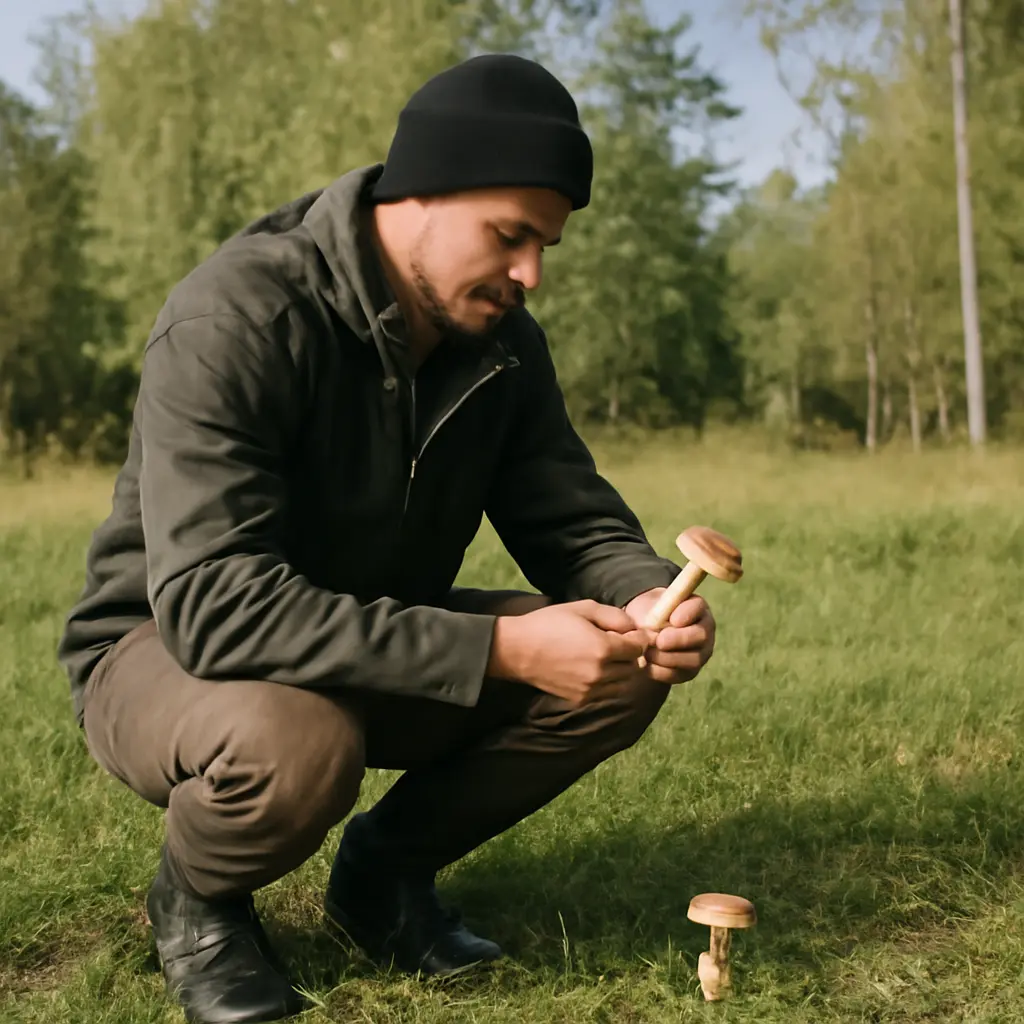
Useful observations may include the cap, gills or pores, stem, ring, base, spore print, bruising, smell, and the surrounding trees or soil. These features must be interpreted together and in the context of regional species. A photograph alone may omit crucial details, particularly the mushroom’s base or underside. Foragers should not eat a specimen unless a qualified local expert has confidently identified the entire collection.
Apps and folk rules are not safety guarantees
Image-recognition applications can suggest possible species, but a suggestion is not a verified identification. Similar-looking fungi, poor lighting, missing views, and regional variation can produce misleading results. The same caution applies to online forums and folk rules. Treat digital tools as aids for learning and documentation, never as the final authority for deciding whether a mushroom is safe to eat.
Responsible foraging reduces exposure
Safer practice starts with eating only mushrooms that have been positively identified by a qualified expert familiar with local species. Keep unidentified specimens separate from known edible ones, avoid mixing species in a meal, and retain a sample or clear photographs if anyone becomes ill. Do not feed wild mushrooms to children or pets; their smaller body size can make a dangerous dose easier to reach. When identification remains uncertain, the safe choice is not to eat the mushroom.
Poisoning cases show why rapid response matters
A suspected mushroom poisoning is a medical emergency, even if the person feels well. Poison centers and emergency clinicians can assess the likely species, amount, and timing and advise on evaluation. Because symptoms may be delayed, waiting at home for illness to appear can cost valuable time.
Document the meal and contact experts promptly
If someone may have eaten a poisonous wild mushroom, contact a poison center immediately; in the United States, call Poison Help at 1-800-222-1222. For severe symptoms or an emergency, call emergency services. Save uneaten mushrooms, scraps, packaging, and photographs, and record when and how much was eaten. Do not induce vomiting or try home remedies unless a medical professional specifically instructs you to do so.
A 2023 California outbreak illustrates the stakes
In late 2023, California public-health authorities investigated a cluster of illnesses associated with death cap mushrooms. The California Department of Public Health reported dozens of suspected cases, hospitalizations, and several deaths during the outbreak. The episode demonstrated how a toxic species can be mistaken for edible mushrooms and how a cluster can affect people across multiple communities. Public-health investigators used exposure histories and mushroom identification to connect cases and warn the public.
Clinical care may require specialist assessment
Treatment depends on the suspected toxin and the patient’s condition. Clinicians may monitor liver and kidney function, provide supportive care, consult poison specialists, and consider treatments used for suspected amatoxin poisoning. Severe liver injury can require evaluation at a transplant center. There is no dependable home treatment that makes a suspected toxic-mushroom meal safe; professional assessment is essential.
Prevention depends on expertise, not confidence
Wild mushroom poisoning is preventable when people treat identification as a high-stakes skill rather than a guessing exercise. Amatoxin species can cause delayed, potentially fatal illness; resemblance and folk tests do not establish safety; and early contact with poison experts can guide urgent care. Foragers should learn from local mycological groups, follow regional public-health advisories, and eat only specimens confirmed by a qualified identifier. If a wild mushroom has been eaten and its identity is uncertain, call a poison center or seek emergency care immediately.
Sources: Centers for Disease Control and Prevention, “Amatoxin-Containing Mushroom Poisonings—Northern California, December 2023,” Morbidity and Mortality Weekly Report, 2024, https://www.cdc.gov/mmwr/volumes/73/wr/mm7316a2.htm; American Association of Poison Control Centers, National Poison Data System Annual Reports, https://aapcc.org/annual-reports/; California Department of Public Health, “Mushroom Poisoning Outbreaks,” https://www.cdph.ca.gov/Programs/OPA/Pages/NR23-027.aspx; National Capital Poison Center, “Mushroom Poisoning,” https://www.poison.org/articles/mushroom-poisoning; Poison Help, “Get help online or call 1-800-222-1222,” https://www.poison.org/.